


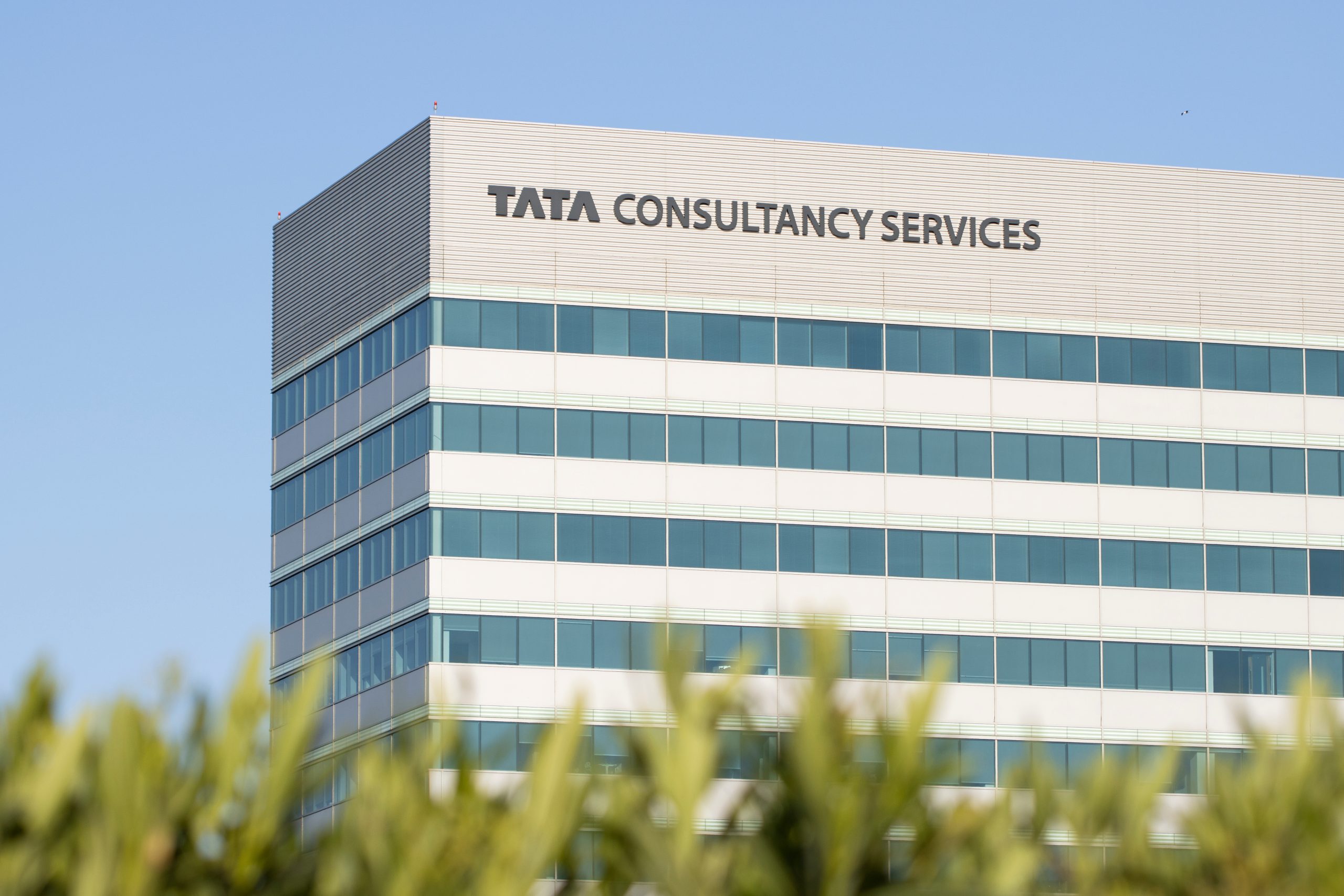
Tata Consultancy Services (TCS), India’s largest IT services company, reported a resilient set of quarterly results for the quarter ended December 31, 2025, reaffirming its strategic pivot toward artificial intelligence (AI). However, the company’s share price has remained under pressure, reflecting broader sector challenges and investor caution on growth outlook.
Financial Highlights: Growth Anchored in AI
TCS delivered consolidated revenue of ₹67,087 crore, up modestly from the previous quarter, and declared a robust dividend, underscoring strong cash generation and shareholder returns. AI-related services stood out, with $1.8 billion in annualised AI revenues growing 17.3 percent sequentially in constant currency, compared with the broader business’s subdued momentum.
While net profit trends varied by report, the company witnessed year-on-year decline in consolidated PAT due to restructuring costs, and 8.5 percent YoY rise, the underlying narrative was clear: AI-led services are gaining traction, helping offset weakness elsewhere.
Market Reaction: Shares Lag Despite Solid AI Momentum
Despite beating revenue expectations and highlighting strong AI demand, TCS shares have struggled to gain sustained ground. In recent trading, the stock dipped marginally ahead of quarterly results, reflecting investor caution amid mixed signals on growth and profitability.
More broadly, TCS has been one of the worst-performing large-cap IT stocks this year, with its share price down significantly from recent highs. Market reports note this year’s decline as one of the company’s steepest annual downturns in share price in more than a decade, eroding a large chunk of market capitalisation.
Why Markets Are Nervous
Several factors have contributed to the downtrend in TCS stock, beyond the usual quarterly volatility:
1. Slower Growth and Revenue Pressure
Analysts and brokerages have flagged weaker-than-expected revenue momentum, especially in certain business segments and regions, leading to downgrades in growth forecasts and target prices. A notable brokerage trimmed its rating and price target, citing macroeconomic headwinds and subdued discretionary client spending.
2. Weak Demand Environment
Persistent caution in global IT spending, particularly in developed markets such as the US and Europe, has dampened demand for traditional services. Clients are still navigating tighter budgets, prioritising cost optimisation over transformational spend—a trend that disproportionately impacts large services organisations like TCS.
3. Layoffs and Workforce Restructuring
TCS made headlines with its announcement of layoffs affecting around 2 percent of its global workforce—primarily middle and senior-level roles—sparking investor concern. The stock reacted negatively to the news, with shares falling as markets digested the implications of structural change.
4. Sector-Wide Weakness
TCS’s share movement has also mirrored broader weakness in the Indian IT sector, where flagship companies have seen multiple sessions of selling pressure, driven by macro cues, visa-policy anxieties, and global economic uncertainty.
5. Foreign Institutional Selling
Some market sources point to reduced participation by foreign institutional investors over the past year, adding to selling pressure and weighing on valuations.
Structural Challenges Beyond Near-Term Headlines
Even as AI emerges as a strategic growth vector, TCS faces underlying structural headwinds:
Talent and Transition Costs:
Recruiting and retaining specialised AI talent remains competitive and costly, particularly in roles such as research, machine learning engineering, and advanced analytics—areas critical to AI productisation.
Transformation Versus Tradition:
AI adoption often cannibalises some legacy services revenue streams, as clients automate routine work that once drove traditional outsourcing contracts. Balancing this transition while protecting revenue stability is a nuanced challenge.
Macro and Geo-Economic Sensitivity:
With over 70 percent of revenue tied to US and European markets, TCS remains exposed to external economic conditions, regulatory shifts, and corporate IT budgets reacting to global uncertainties.
Where TCS Is Headed
Against a backdrop of mixed near-term market sentiment, TCS is pressing ahead with its transformation agenda, sharpening its focus on agentic AI, cloud-led platforms, and scalable AI infrastructure. Strategic initiatives such as the HyperVault AI data centre business underscore a deliberate shift toward higher-value, outcome-oriented offerings that move beyond traditional services delivery.
Chief Executive Officer and Managing Director K Krithivasan said the momentum seen in the previous quarter carried through into Q3 FY26, reinforcing the company’s long-term ambition to emerge as the world’s largest AI-led technology services provider. He noted that TCS’ AI services now generate $1.8 billion in annualised revenue, a reflection of sustained client demand and targeted investments across the entire AI stack, spanning infrastructure, platforms, and intelligence.
This acceleration is being supported by sharper execution on the ground. Aarthi Subramanian, Executive Director and President and Chief Operating Officer, highlighted how TCS is helping enterprises identify high-impact AI use cases through structured Innovation Days and deploy solutions faster using Rapid Builds. She added that customers continue to invest in cloud, data, cybersecurity, and enterprise modernisation to prepare their organisations for AI at scale, while recent acquisitions such as Coastal Cloud are strengthening TCS’ Salesforce and AI-led advisory capabilities.
For investors, the recent softness in the stock reflects short-term uncertainty rather than a deterioration in fundamentals. While sentiment across the IT services sector remains cautious, the underlying quality of TCS’ growth is improving. Patient capital may find comfort in the company’s deepening AI capabilities, strong cash generation, and expanding deal pipeline, even as markets recalibrate expectations in an era where AI is rapidly redefining the enterprise technology landscape.