



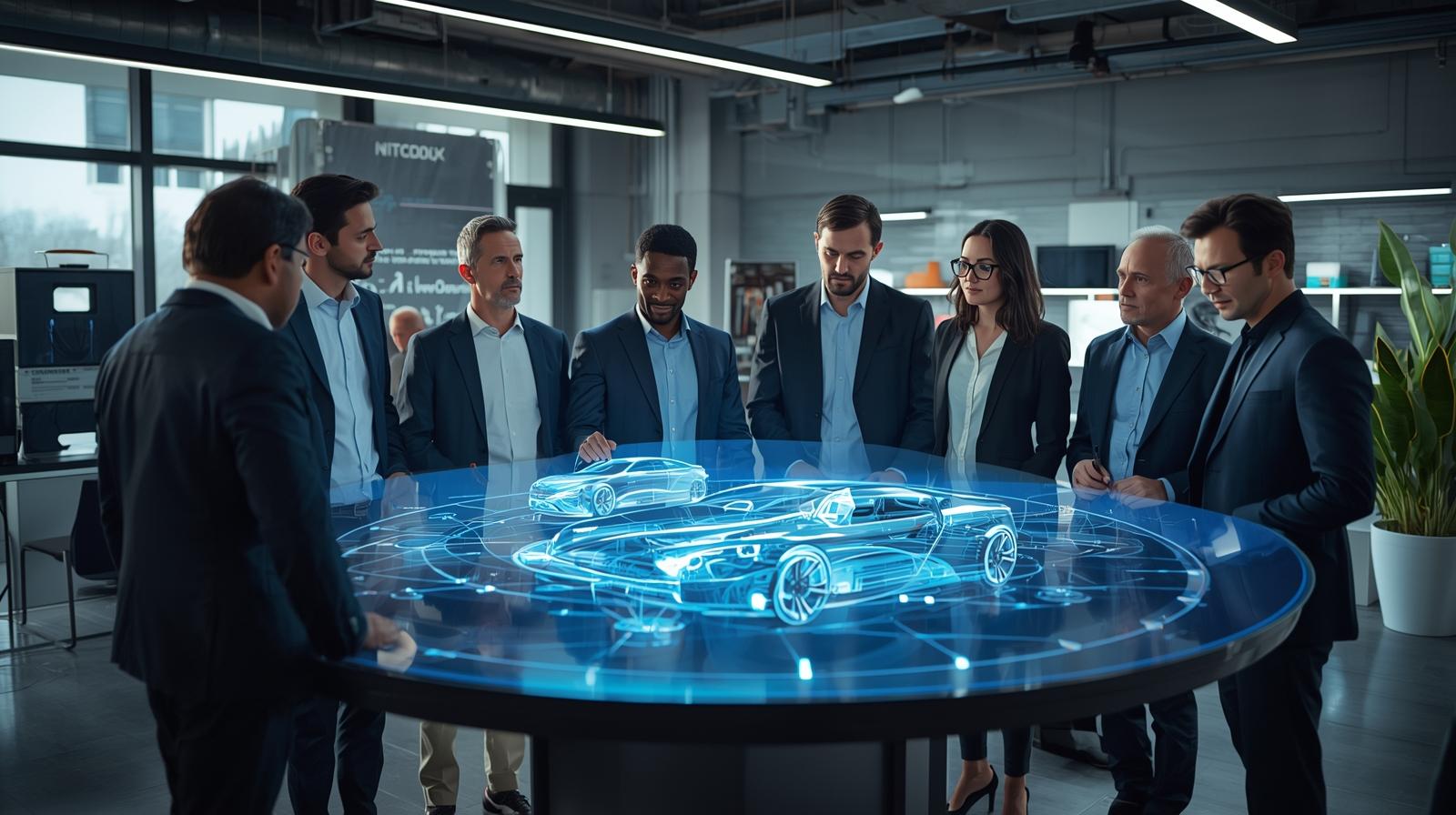
The global automotive industry is in a full swing AI moment right now. Walk into any OEM boardroom and the energy is unmistakable. AI has become the new competitive mantra. Automakers are pouring money into machine learning platforms, autonomous driving programs, digital twins, predictive quality systems, generative design and data driven supply chains.
But a new Gartner outlook suggests this enthusiasm will not last forever.
By 2029, only 5 percent of automakers will keep pushing aggressive AI investments. This is a dramatic fall from the 95 percent who are doing so today. Gartner calls this the end of the sector’s early stage AI euphoria.
This shift is not a slowdown by choice. It is a market correction.
The coming AI divide
Pedro Pacheco, vice president analyst at Gartner, says many automakers are trying to achieve disruptive outcomes even though their software and data foundations are still immature. In other words, they are running ahead of their actual capabilities.
Over the next five years this gap between ambition and reality will grow even wider.
According to Gartner, the winners will be the small group of automakers that already behave like software driven organizations. These companies usually have strong data pipelines, modern engineering stacks, leadership teams with deep technology understanding and a willingness to keep investing in AI for the long term.
Pacheco notes that software and data sit at the heart of all successful AI programs. Companies that have already achieved maturity in these areas will naturally move faster than the rest.
The implication is clear. The industry will split into two groups. A small set of AI leaders who accelerate and a much larger group that slows down or stalls.
The factory of 2030 and the rise of full automation
Even as broad AI investments cool off, another transformation is speeding up. Robotics powered manufacturing is rapidly advancing toward full automation.
Gartner predicts that by 2030 at least one global automaker will achieve fully automated vehicle assembly. This will mark one of the most significant operational milestones in the history of automotive manufacturing.
This progress is already visible. Twelve of the top twenty five automakers are piloting advanced robotics that blend vision AI, autonomous mobile manipulators, robotic arms with adaptive control and event driven orchestration systems.
Marco Sandrone, vice president analyst at Gartner, says automated assembly lines reduce labor costs, improve consistency, shorten production cycles and deliver higher quality output. For consumers, this could mean better vehicles at more accessible prices.
The shift will reduce traditional assembly line roles. However, new jobs in AI oversight, robotics maintenance, data engineering and software development will emerge at the same time. If companies invest in large scale reskilling, the transition could be managed without severe workforce disruption.
Why the hype cycle is hitting its limit
If automakers are so enthusiastic today, why will most of them slow down in the next few years
Gartner’s analysis points to several reasons.
1. Low software maturity across legacy automakers
Many large OEMs are still organized for mechanical manufacturing, not digital engineering. They are trying to retrofit AI onto legacy systems that were never designed for it.
2. High cost of true AI transformation
Building robust data platforms, modular software architectures and reusable AI libraries requires continuous spending that goes far beyond small innovation budgets.
3. Slow return on investment
AI programs produce value over long timelines. Automotive companies, which are driven by short quarterly expectations, often lose patience.
4. Tightening global regulations
Autonomous driving and safety critical AI are seeing increasing regulatory scrutiny. Compliance adds cost and slows deployment.
These structural challenges slow down the majority of automakers even as the top tier continues to move ahead.
2029 to 2035 and the new competitive order
Gartner’s prediction highlights a deeper trend. AI investment is not fading. It is concentrating.
The few automakers that continue investing aggressively will define the next decade of the industry. They will lead in autonomous systems, digital services, predictive manufacturing, accelerated EV development and data ecosystem monetization.
Everyone else risks falling into a slower tier where margins tighten and competitiveness declines.
A broader push to formalize AI guidance
Gartner is positioning itself strongly in this landscape. The firm continues to expand its AI guidance ecosystem which includes the AskGartner AI tool, thousands of written insights and over a thousand AI use cases. As automakers navigate post euphoria AI strategy, these advisory platforms are becoming central to executive decision making.
The bottom line
The next five years will separate automotive AI visionaries from those chasing hype without foundations.
Most automakers will eventually step back from rapid AI investment as the scale, cost and organizational change required become clearer. A small elite will continue building the digital and data centric foundations needed for long term AI success.
At the same time, factory floor automation is entering a historic phase. By 2030, the world is likely to see its first fully automated vehicle assembly line.
The AI revolution in automotive is not ending. It is entering its more mature stage. And that is when the biggest shifts usually begin.