


In 2025, Generative AI (GenAI) remains the crown jewel of technological innovation, promising efficiencies and new business models. Yet beneath the dazzling surface of AI-driven possibilities lurk risks that many enterprises overlook—a blind spot Gartner’s latest research calls urgent for CIOs worldwide.
At a recent Gartner symposium in Kochi, India, analysts laid bare a series of hidden hazards imperiling AI’s long-term promise. These “blind spots” are not the headline challenges of value creation or cybersecurity, but the shadowy, second-order consequences of rapid AI adoption. Enterprises that fail to address these risks risk being outpaced or disrupted by 2030.
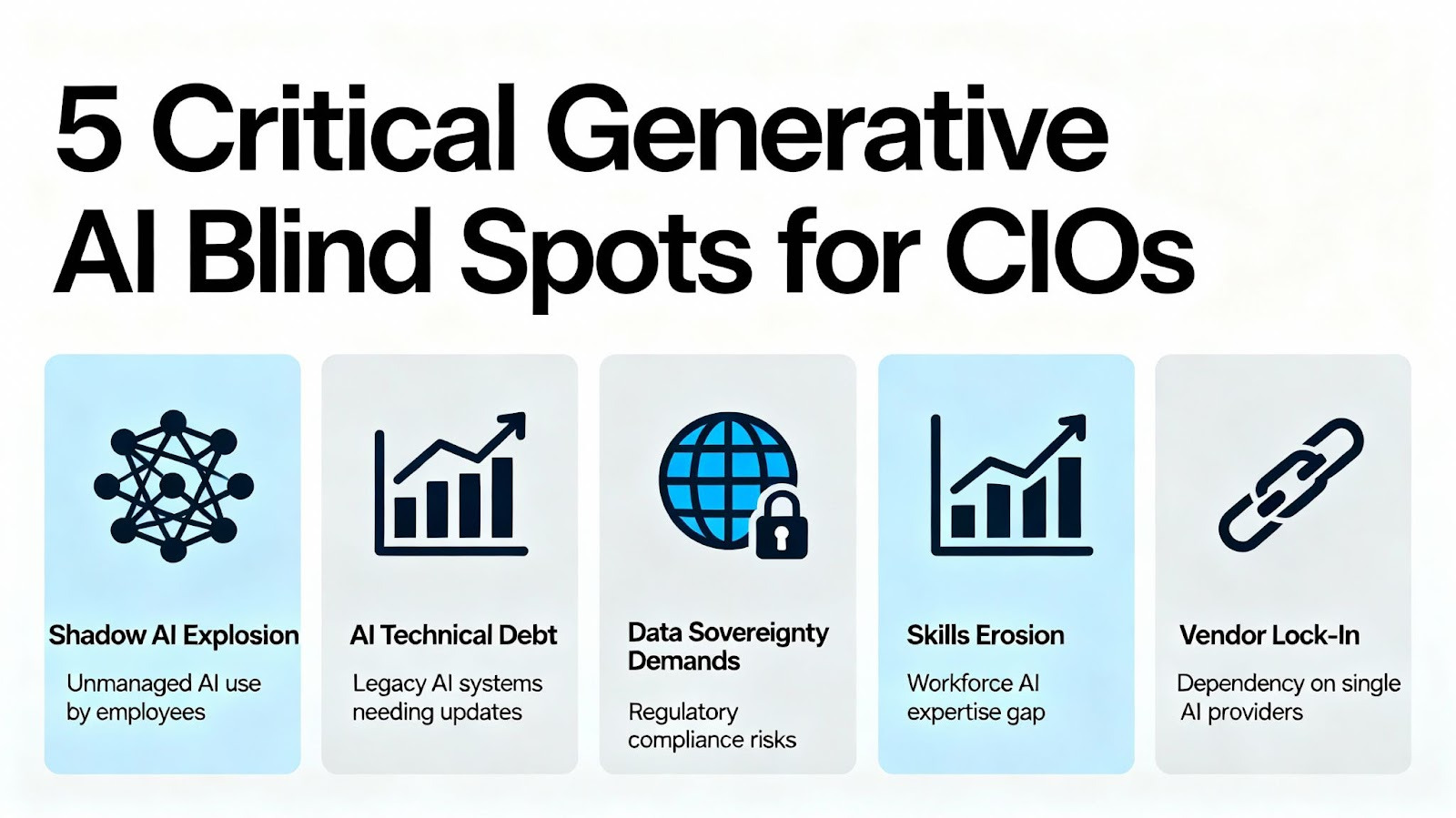
Foremost is the rise of “shadow AI,” the unsanctioned use of public AI tools by employees. Nearly seven in ten organizations suspect such use, a genie letting loose without governance or oversight. The consequences are tangible: leakage of intellectual property, compliance lapses, and security breaches. Gartner predicts 40% of firms will face incidents tied to shadow AI in less than a decade. The CIO’s weapon against this stealthy threat is clear policies and audits, but the spectre of lost control haunts many.
Next looms the problem of AI technical debt. AI’s seductive speed in delivering results conceals growing maintenance burdens. Enterprises increasingly struggle to keep up with the cost and complexity of fixing or updating AI artifacts—from code to content. Half will face delayed upgrades or ballooning expenses by 2030, threatening the very business cases that justified adoption.
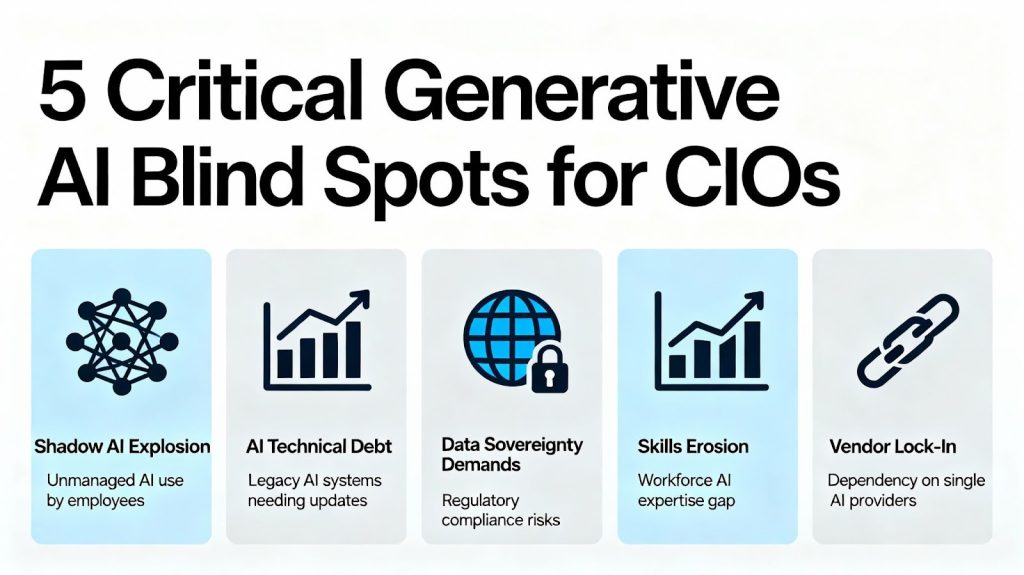
Regulation across the globe is tightening too, particularly around data and AI sovereignty. Governments demand that their data and AI processing remain within given borders—a geopolitical fence that splinters global AI deployments. By 2028, most nations will mandate such sovereignty, complicating IT architectures and inflating costs. The savvy CIO, Gartner advises, must engage early with legal and compliance teams to embed sovereignty requirements into AI strategy, selecting vendors accordingly.
Human skill erosion is the subtler hazard of AI’s rise. Reliance on algorithms risks dulling judgment, intuition and tacit knowledge that define expertise. The loss of institutional memory is gradual and often visible only when AI slips up—especially in edge cases demanding human subtlety. Balanced integration, where AI complements rather than replaces human insight, may be the antidote.
Finally, CIOs must beware “vendor lock-in,” an outcome of choosing convenience over flexibility in AI platforms. Proprietary APIs and model dependencies curtail agility and bargaining power, a costly trap for fast-scaling enterprises. Gartner counsels prioritizing open standards and interoperability, demanding modularity to maintain future freedom.
The net takeaway is clear: AI’s promise cannot be realized without vigilance. CIOs face a dual mission—to unlock innovation while taming invisible risks. Those who succeed will harness AI as a strategic asset. Those who ignore the blind spots risk AI-induced disruption.
This analysis sits alongside Gartner’s reaffirmation of Okta’s leadership in cloud identity management, a foundational layer securing AI-driven enterprises. Together, robust identity governance and thoughtful AI deployment form the linchpins of future-proofed digital business.